Location
Santa Cruz, California
Company
Cal-Cruz Hatcheries, Inc.
Investigation
2009
Outcome
No Charges Filed. The Truth Still Stands.
Lawsuit settled in 2012: the hatchery closed for good and its owner was barred from handling animals for five years.
Press
In The News
Using a hidden camera, an Animal Outlook investigator documented shocking abuses forced upon newly-hatched chicks and ducklings while employed at Cal-Cruz Hatcheries in 2009.
The video evidence was immediately turned over to the Santa Cruz County Animal Services Authority and the District Attorney’s Office. In response, a follow-up investigation conducted by humane law enforcement not only corroborated our evidence of abuse and neglect but also resulted in the impoundment of 88 ducklings. Many of these rescued birds were given a second chance at life at an area sanctuary, though others were too sick or injured to survive.
Despite our strong evidence of abuse combined with additional information gathered through the Animal Services Authority’s own investigation, the District Attorney’s office sat on this case for a year and then declined to prosecute. Animal Outlook issued a statement to set the record straight.
That’s when Animal Outlook decided to seek justice for these birds by taking legal action against Cal-Cruz Hatcheries – read about our legal case, successful settlement, and subsequent legal activity.
Caught on Camera: Inside the Hatchery
While employed as a maintenance worker at California-based Cal-Cruz Hatcheries Inc. for nearly a month in 2009, Animal Outlook’s investigator witnessed and painstakingly documented miserable conditions forced upon thousands of newly hatched birds, including:
- A chick drowning in a bucket of liquid waste
- Birds entangled in machinery, their dead bodies mangled, decapitated, or missing limbs
- Sick or severely injured birds left to suffer for hours
- Unwanted hatchlings dumped down the egg shell disposal chute, then sprayed with a high-pressure hose
- Birds thrown five to six feet across the room into buckets where they often languished for hours
Cal-Cruz Investigator’s Log Notes
“When I walked into work on my first day as a maintenance worker, I walked through the facility and saw several boxes filled with chicks who appeared to be suffering—some looked sick, others were visibly injured, a few looked severely mangled but still breathing. I later learned that these ‘discarded’ birds are manually removed from the processing lines, collected throughout the day, then killed hours later. Many become injured on the machines routinely used for processing.”
“On my first day, I also noticed a few dead, mangled chicks under a conveyor belt leading into the area where they are sexed. By the end of the day, I couldn’t even count the number of dead birds on the ground—most of them appeared to have parts of their skin or limbs removed, some had been beheaded.”
“At the end of the day today, the ‘discarded’ birds were being dumped into the eggshell disposal chute, which is routine, but there were so many birds being thrown in there at once today that the system clogged, so [an employee] grabbed a mop handle and started jamming it into the pile of birds, forcing them into the drain.”
“As I was leaving today, I walked by the egg shell disposal chute and heard a bird chirping. I looked in and saw a single chick drowning in water that accumulated near the drain, which I’m guessing was clogged again.
“Every day that chicks are hatched, I see buckets and buckets of sick and injured birds piling up. Some are dead, having been severely mangled or disemboweled but most are alive—barely alive, and suffering from obvious injuries. Their pain is unimaginable; … it’s so heartbreaking….”
Cal-Cruz Animal Cruelty – What Experts Say
Animal Outlook asked independent experts in animal welfare and physiology to review our video footage from Cal-Cruz Hatcheries.
Here are excerpts from their statements:
Dr. Sara Shields, Ph.D. has a doctorate from the Univ. of California at Davis in Animal Behavior. Dr. Shields is a leading expert in animal welfare, with more than 10 years of experience as a research scientist, teacher, and consultant in animal welfare. She specializes in the welfare of poultry. After reviewing our video, Dr. Shields stated:
“I was truly disheartened by the obvious suffering of the chicks and ducklings I observed. … The most outstanding aspect of the video is what appears to be a general desensitization of facility employees to the sentient nature of these young animals.”
“It is inexcusable to leave animals who are clearly experiencing pain for a prolonged time period.”
“Overall, it appears that there is a general lack of safeguards to ensure that individual chicks and ducklings are cared for in an appropriate manner.”
Dr. Nedim C. Buyukmihci, DVM is a veterinarian internationally recognized for his professional expertise, with over 36 years of experience, much of it involving poultry. He is also Emeritus Professor of Veterinary Medicine at the Univ. of California. After reviewing our video, Dr. Buyukmihci stated:
“I saw evidence of contusions, abrasions, limb or extremities amputations, and decapitations. These are clearly the result of external trauma and consistent with that which would be caused by the machinery.”
“[T]he workers themselves were a source of suffering for the birds. It was clear from their actions that there was no concern for the welfare of the birds. … The birds in this video were treated in an extremely brutal and uncaring fashion.”
“Because these birds are precocious animals and have a well-developed central nervous system at hatching, the injuries or other illness I saw would have caused considerable pain and suffering for the birds.”
Cal-Cruz Rescue – Impounded Birds Get Second Chance at Life
Our video evidence uncovering shocking animal abuse prompted Santa Cruz County Animal Services Authority to look further into this case.
In conducting its own follow-up investigation, this humane law enforcement agency collected additional evidence of abuse and neglect and impounded 88 ducklings in need of care.
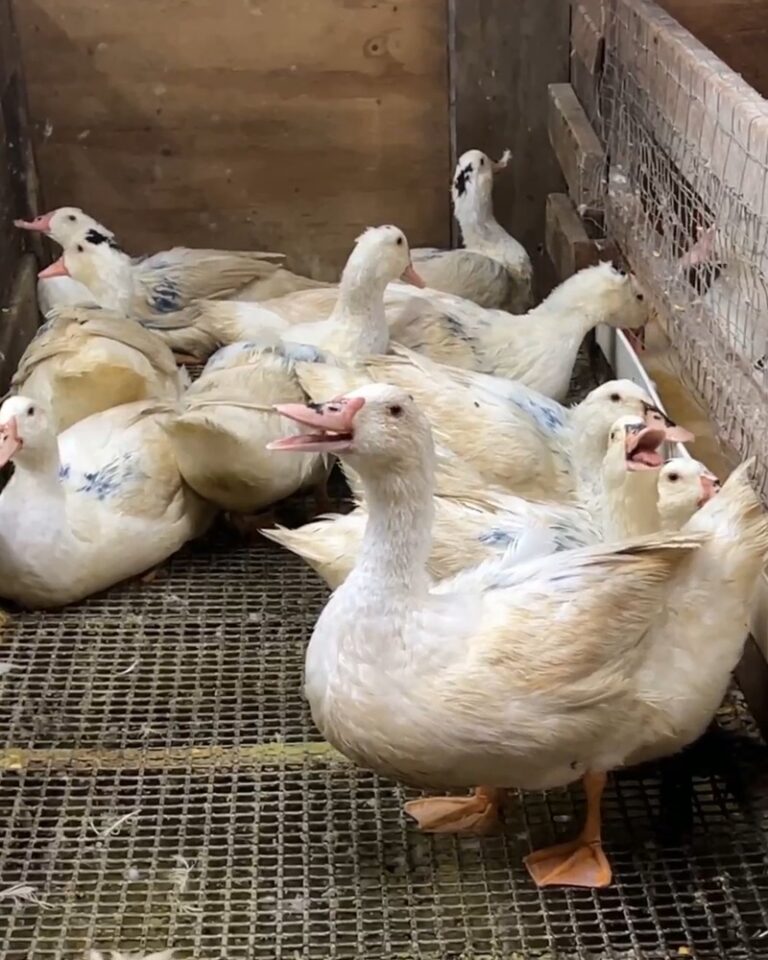
While several of these newly-hatched birds were too sick or injured to survive, more than two dozen were given a new chance at life at a nearby sanctuary.
Rescued ducks now living at Farm Sanctuary. By Connie Pugh.
Cal Cruz Hatcheries Lawsuit & Settlement
November 2014 Update:
Despite a 2012 settlement agreement prohibiting former Cal-Cruz Hatcheries, Inc. owner Brian Collins from working with animals until 2017, an Animal Outlook undercover investigator has obtained evidence that he is secretly and unlawfully involved in the operation of a hatchery-like business called “Peninsula Poultry.”
On November 19, 2014, Animal Outlook filed a motion with the Santa Cruz Superior Court asking the court to enforce the terms of the settlement agreement and court order, and also seeking sanctions and monetary damages from Collins.
In June 2012, Animal Outlook (then Compassion Over Killing), represented by Animal Legal Defense Fund (ALDF), finalized a settlement and court order resolving a lawsuit alleging widespread animal abuse and neglect at Cal-Cruz Hatcheries, Inc., a Santa Cruz hatchery that processed millions of baby birds destined for the chicken and duck meat industries annually. We argued the evidence documented in an undercover video of the hatchery constituted unlawful animal cruelty, in violation of the California Business and Professions Code, undermining the integrity of the market. This settlement marked the first time allegations of animal cruelty were successfully resolved using this civil law.
The settlement agreement and accompanying court order prohibits Cal-Cruz from ever keeping or having charge of any animal, and prohibits owner Brian Collins from “owning, possessing, controlling, handling, or being in any way legally responsible for the welfare of animals” until 2017. More details about the settlement and initial lawsuit here.
Case Timeline
November 19, 2014 – COK and Cal-Cruz owner back in court over suspected breach of settlement agreement
June 10, 2012 – Victory! COK, Cal-Cruz, and owner Brian Collins settle lawsuit
January 18, 2012 – Whole Food Market Severs Ties with Cal-Cruz
January 12, 2012 – COK & ALDF sue Cal-Cruz for unlawful and cruel business practices
June 7, 2010 – COK release video exposing animal cruelty at Cal-Cruz Hatcheries after Santa Cruz authorities decline to take action
January 2009 – COK investigator works inside Cal-Cruz Hatcheries – evidence is immediately turned over to local authorities. This prompts an investigation by humane law enforcement that results in the impoundment of 88 ducklings
Press Releases:
- Nov. 20, 2014: COK and Cal-Cruz Owner Back in Court Over Suspected Breach of Settlement Agreement
- June 12, 2012: Animal Cruelty Lawsuit Settled: Santa Cruz Hatchery Closed, Owner Agrees Not to Work with Animals for Five Years
- Jan. 11, 2012: Santa Cruz Chicken Hatchery Sued for Unlawful Business Practices Due to Shocking Animal Abuse
- June 2, 2010: Undercover Video at Santa Cruz Hatchery, Prompts Authorities to Impound Ducklings
Cal-Cruz Hatcheries
This documented case of animal abuse at Cal-Cruz Hatcheries is not an isolated incident. Rather, animal cruelty is standard in the meat-, egg-, and dairy industries, and the most effective step each of us can take to help stop it is to simply leave animals off our plates.
Pledge to choose vegan foods
Request a free Vegetarian Starter Guide for yourself or a friend.
This investigation exists because someone was willing to fund it. Your gift keeps our investigators in the field and our attorneys in court.
Support Our Work
In The News
Press Mentions
Note: this page is more than three years old and press links may no longer be active.
Santa Cruz WeeklyNew Photos Raise Old Questions about Hatchery
Dec 14, 2010
Santa Cruz SentinelErica Meier: Stopping farmed animal abuse, one meal at a time
Jun 13, 2010
San Francisco ChronicleDuck Abuse at Santa Cruz Hatchery Caught on Video
Jun 4, 2010
CBS46-KION in Santa CruzActivist Group Accuses Santa Cruz Hatchery of Abuse
Jun 3, 2010
San Francisco ChronicleGroup releases graphic footage of hatchery ducklings and chicks
Jun 3, 2010
KCBS-106.9FMCalls of Poultry Abuse in Santa Cruz
Jun 3, 2010
Santa Cruz NewsSanta Cruz Hatchery Accused of Animal Cruelty
Jun 3, 2010
ABC7-KGO in San FranciscoGroup claims ducklings abused at Santa Cruz hatchery
Jun 2, 2010
Santa Cruz SentinelUndercover video shows dying chicks, ducklings at Live Oak hatchery
Jun 2, 2010
San Jose Mercury NewsAnimal rights group to release video of alleged abuse at SC hatchery
Jun 1, 2010
Take Action
Investigations like this one are only possible because of supporters like you. Your gift helps us document the truth and hold animal agriculture accountable.
Support Our Investigations
From the Investigation
Every Photograph Is Evidence.
Documented on site by an investigator.
Make a Difference
The Animals Cannot Wait.
The Animals Cannot Wait.
Neither Can We.
Your gift funds investigations, legal action, and the animals.
Donate Now →
Animal Outlook is a registered 501(c)(3).
Your gift is fully tax-deductible.